Formule E Evolution
A new era of racing begins
Motorsport has always been about pushing limits—of speed, technology, and imagination. But over the past decade, one championship has redefined what racing can be. What started as a bold experiment has grown into one of the most innovative and forward-thinking series in the world: Formula E.
At Formula E Chronicles, the mission has always been to follow not just the races, but the evolution of electric motorsport—tracking teams, drivers, and the groundbreaking technology behind them. Today, Formula E stands as a symbol of how racing and sustainability can coexist, delivering high-speed action without compromising the future.
This article takes you through the journey—from its origins to the latest season—showing how Formula E became a global phenomenon.
The beginnings: a revolutionary idea
The concept of an all-electric racing series was first proposed in 2011, aiming to combine motorsport excitement with sustainable innovation. Just three years later, in 2014, the first race took place in Beijing, marking the birth of a completely new category of racing.
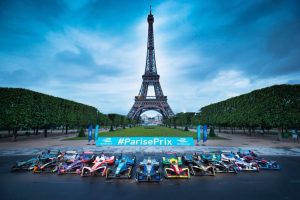
Unlike traditional motorsport championships, Formula E was designed around city-center street circuits. Instead of remote tracks, races would unfold in the heart of major cities—bringing the spectacle directly to fans while showcasing electric mobility in real-world environments.
From the start, the series positioned itself as more than racing—it was a platform for technological progress, urban innovation, and environmental awareness.
What makes Formula E different?
Formula E isn’t just another racing championship—it’s fundamentally different in how it operates and what it represents.
1. Fully electric power
Every car in the championship is powered entirely by electricity. This eliminates emissions during races and places the focus on efficiency, battery management, and smart energy use.
2. City racing
Tracks are built on temporary street circuits, often in iconic locations. This creates tight, technical layouts that lead to unpredictable and exciting races.
3. Energy strategy
Drivers must carefully manage their energy throughout the race. It’s not just about speed—it’s about efficiency and timing, adding a strategic layer rarely seen in other series.
4. Rapid innovation
Formula E cars evolve quickly. The introduction of new generations of vehicles has continuously improved performance, sustainability, and technology.
Evolution of the cars: from Gen1 to Gen3 and beyond
One of the most fascinating aspects of Formula E is how quickly the cars have developed.
- Gen1 (2014–2018): Early electric racers required mid-race car swaps due to limited battery capacity.
- Gen2 (2018–2022): Bigger batteries eliminated car swaps, increased speed, and introduced more advanced systems.
- Gen3 (2022–present): A major leap forward, with lighter cars, faster acceleration, and cutting-edge software integration.
The current generation can reach speeds of around 322 km/h, making them some of the fastest electric race cars ever built.
Even more impressive is the introduction of fast-charging capabilities, allowing energy boosts during races—something that could influence future road car technology.
The championship structure
Formula E operates as a global championship, with races known as E-Prix held across multiple continents.
Each season features:
- Multiple teams and drivers competing worldwide
- A points system determining both driver and team champions
- A mix of iconic urban tracks and selected permanent circuits
Since 2020, Formula E has officially held FIA World Championship status, placing it among the highest tiers of international motorsport.
Growth and global impact
Over the years, Formula E has attracted major manufacturers and global brands. Companies like Porsche, Jaguar, Nissan, and Maserati have joined the championship, using it as a testing ground for electric vehicle technology.
This manufacturer involvement has turned Formula E into more than entertainment—it’s now a research and development platform for the future of mobility.
At the same time, the championship has helped reshape public perception of electric vehicles. What was once considered slow or impractical is now associated with speed, innovation, and cutting-edge engineering.
Season 11 and the modern era
The current era of Formula E, highlighted by Season 11 (2024/25), showcases how far the series has come. The racing is faster, the technology more advanced, and the competition tighter than ever.
Recent developments include:
- Introduction of Pit Boost, enabling rapid mid-race charging strategies
- Continued refinement of Gen3 cars
- Expansion into new markets and circuits
- Increased focus on fan engagement and digital experiences
Season 11 has been described as one of the most competitive in the series, with teams pushing the limits of both performance and efficiency.
The future: Gen4 and beyond
Looking ahead, Formula E is preparing for its next major leap: the Gen4 era, expected around 2026–2027.
These future cars are anticipated to bring:
- Even higher speeds and power output
- Improved battery efficiency
- Greater sustainability through recyclable materials
- Enhanced race formats and fan interaction
As electric vehicle technology continues to evolve, Formula E will remain at the forefront—bridging the gap between motorsport and real-world innovation.
Why Formula E matters
Formula E isn’t just another racing series—it represents a shift in how we think about motorsport and mobility.
It proves that:
- Racing can be both exciting and sustainable
- Innovation can happen faster under competition
- Electric vehicles can deliver performance at the highest level
For fans, it offers something unique: unpredictable races, cutting-edge technology, and a glimpse into the future.
For the industry, it serves as a testing ground for the next generation of transportation.
Conclusion
From its humble beginnings in 2014 to its current status as a global championship, Formula E has transformed the landscape of motorsport. What once seemed like an ambitious experiment is now a key player in shaping the future of racing and electric mobility.
At Formula E Chronicles, the journey continues—covering every innovation, every race, and every step forward in this electrifying story.
As the series evolves toward Gen4 and beyond, one thing is clear: Formula E isn’t just keeping up with the future—it’s driving it.